

01
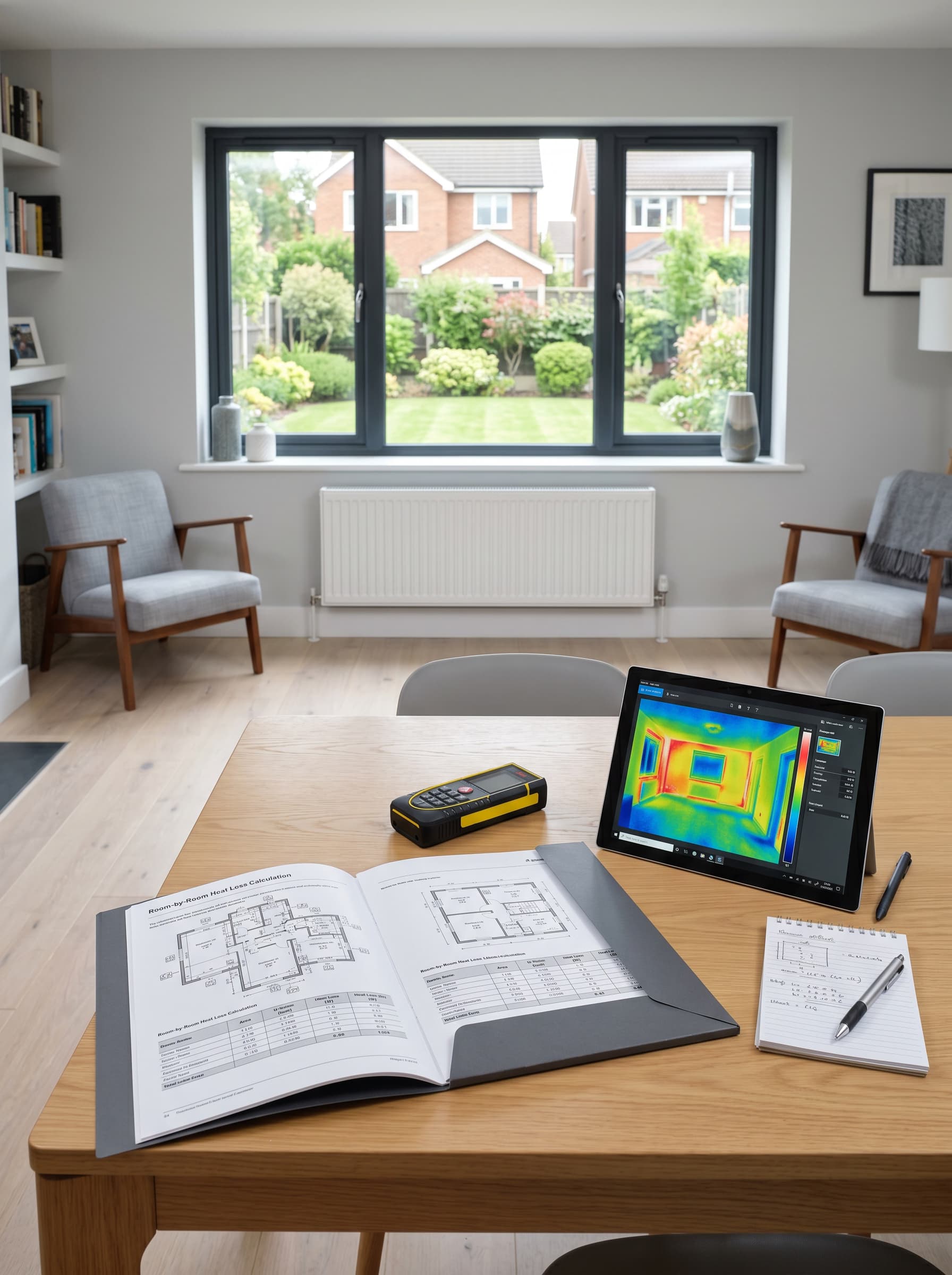
Room-by-room heat loss calculation
A full calculation, documented and shared with you. We do not rely on rules of thumb or kWh-per-square-metre shortcuts. Both are commonly wrong by 30% or more.
Output — Documented loadAir source heat pumps
Designed around a room-by-room heat loss survey of your home, not a number off a calculator. MCS certified, the grant applied to your quote, and a clean install handled end to end.
Why this matters
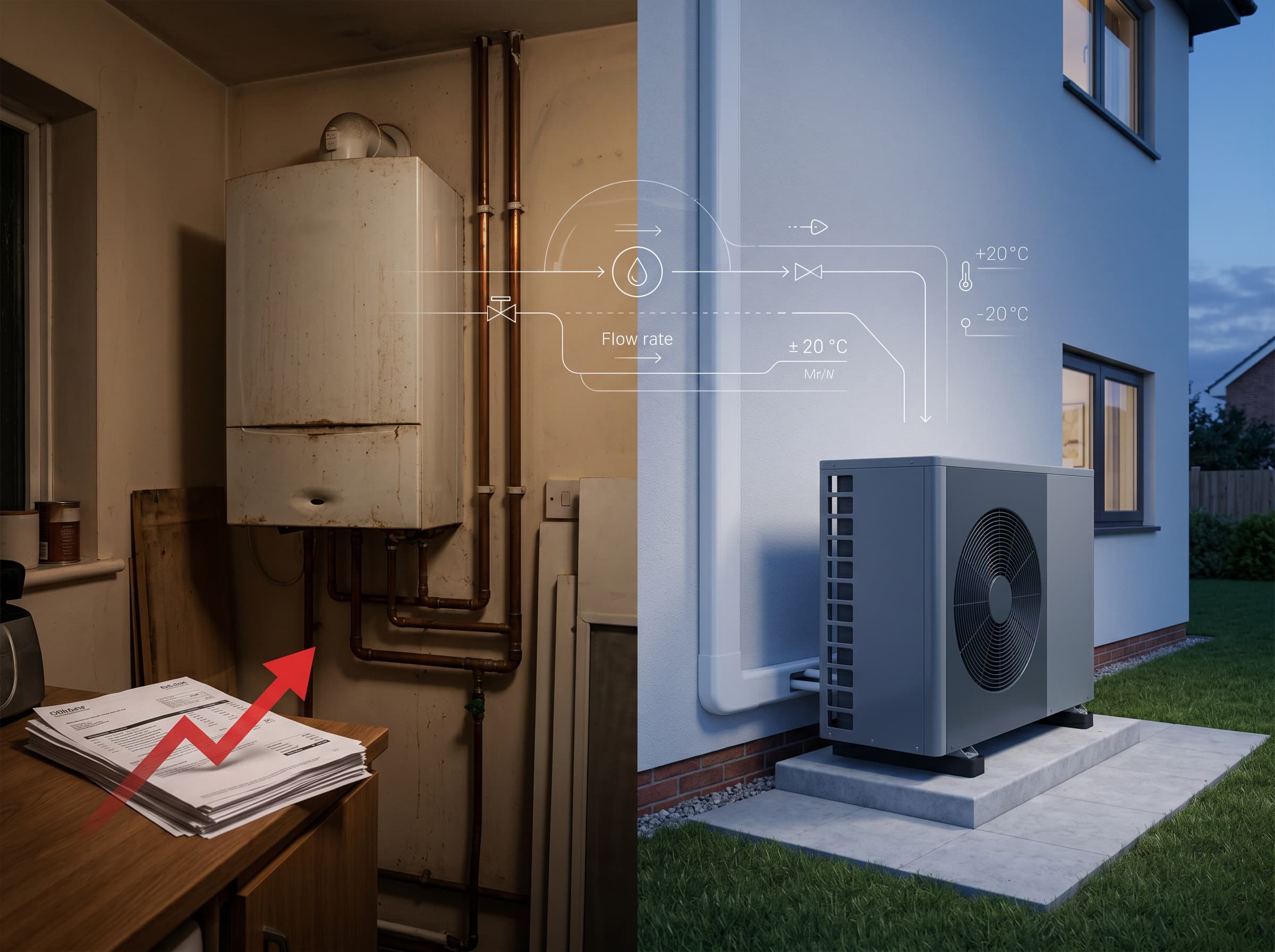
Heat pumps are the route off volatile gas prices, but they are not a direct boiler swap. Sizing, emitters, controls, and commissioning each make the difference between a system that performs for years and one that disappoints from day one. Getting the design right is the whole job.
What you get
Not a box bolted to a wall. Everything below is designed around your building, then handed over so you know how to run it.

Our approach
A full calculation, documented and shared with you. We do not rely on rules of thumb or kWh-per-square-metre shortcuts. Both are commonly wrong by 30% or more.
Output — Documented load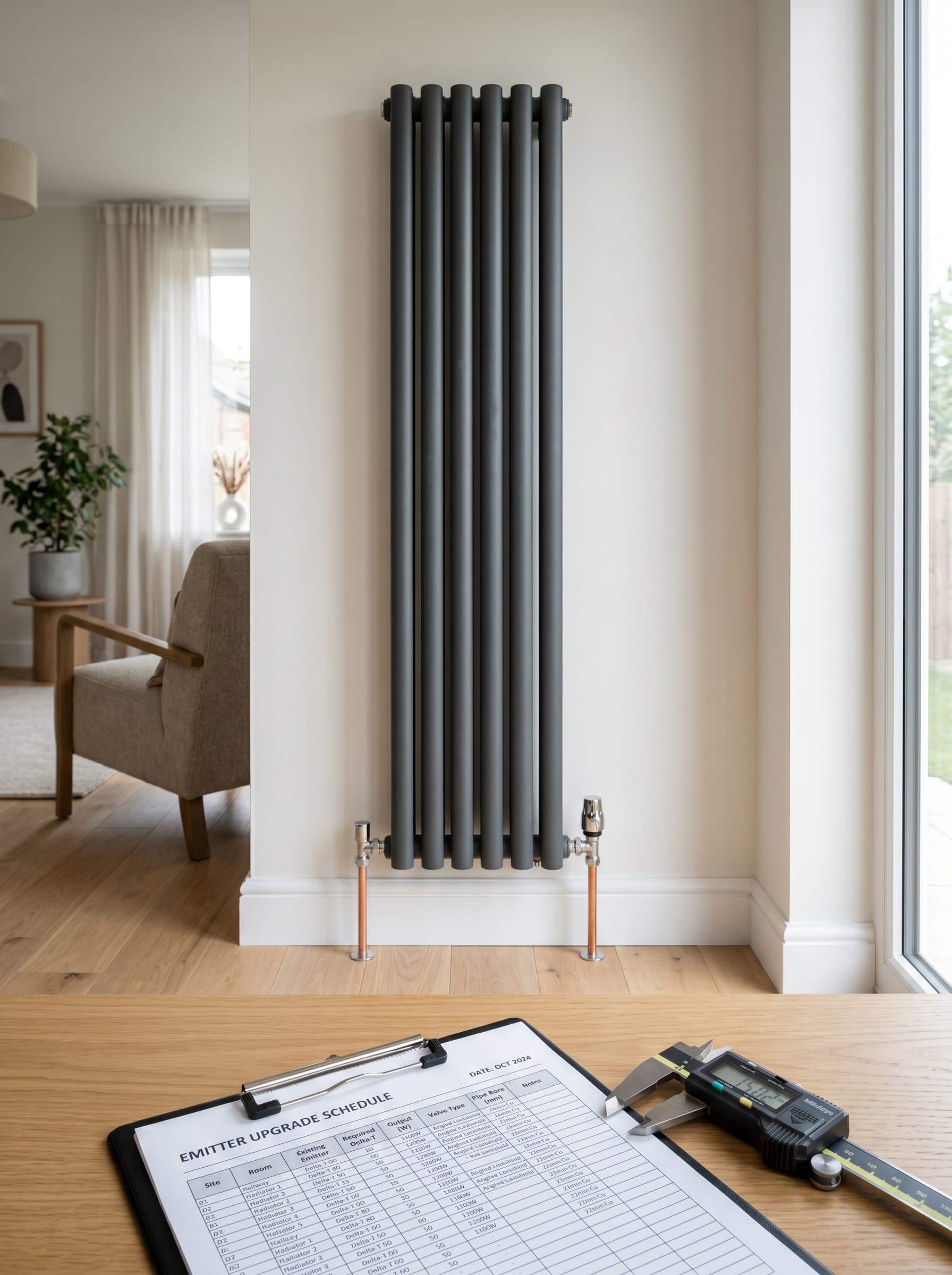
Radiators, underfloor, pipe bore: heat pumps work at lower flow temperatures, which means some emitters need upgrading. We quantify exactly what.
Output — Upgrade schedule
We model your expected annual running cost across two or three tariff scenarios: standard, Octopus Cosy, and export-aware if you have solar. No 'three times more efficient' shortcuts.
Output — Cost by tariff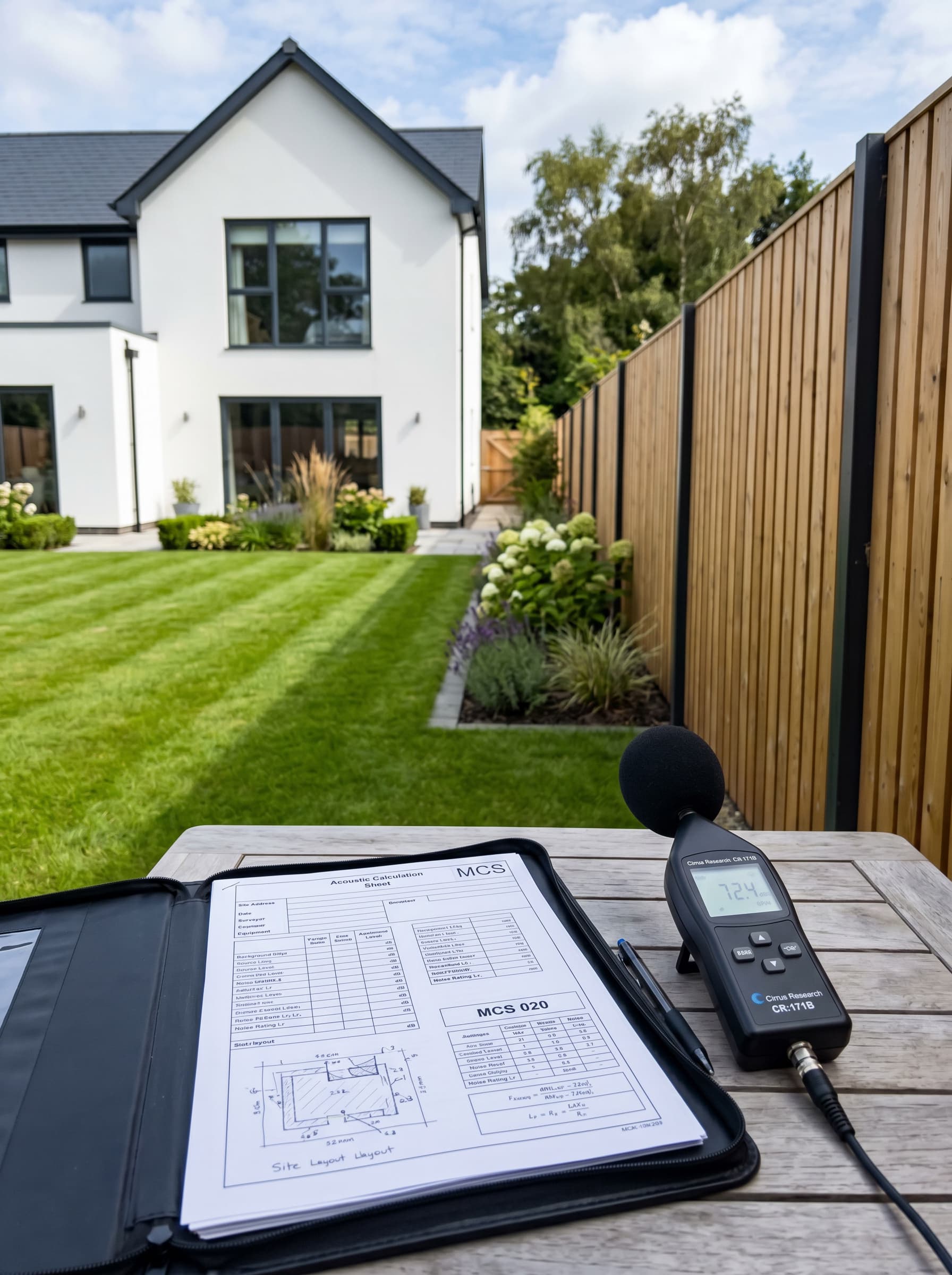
MCS 020 noise calculation performed at survey. We propose placement that meets permitted-development noise limits, and specify anti-vibration detailing where it matters.
Output — MCS 020 complianceThe process
No surprises, no jargon. A clear, documented path from your first call through to handover and the follow-up visit, so you always know what happens next and why.

A fifteen-minute call about your property, current heating, and what is prompting the change. We confirm whether a survey is worth booking.
You get · A straight yes/no on fit
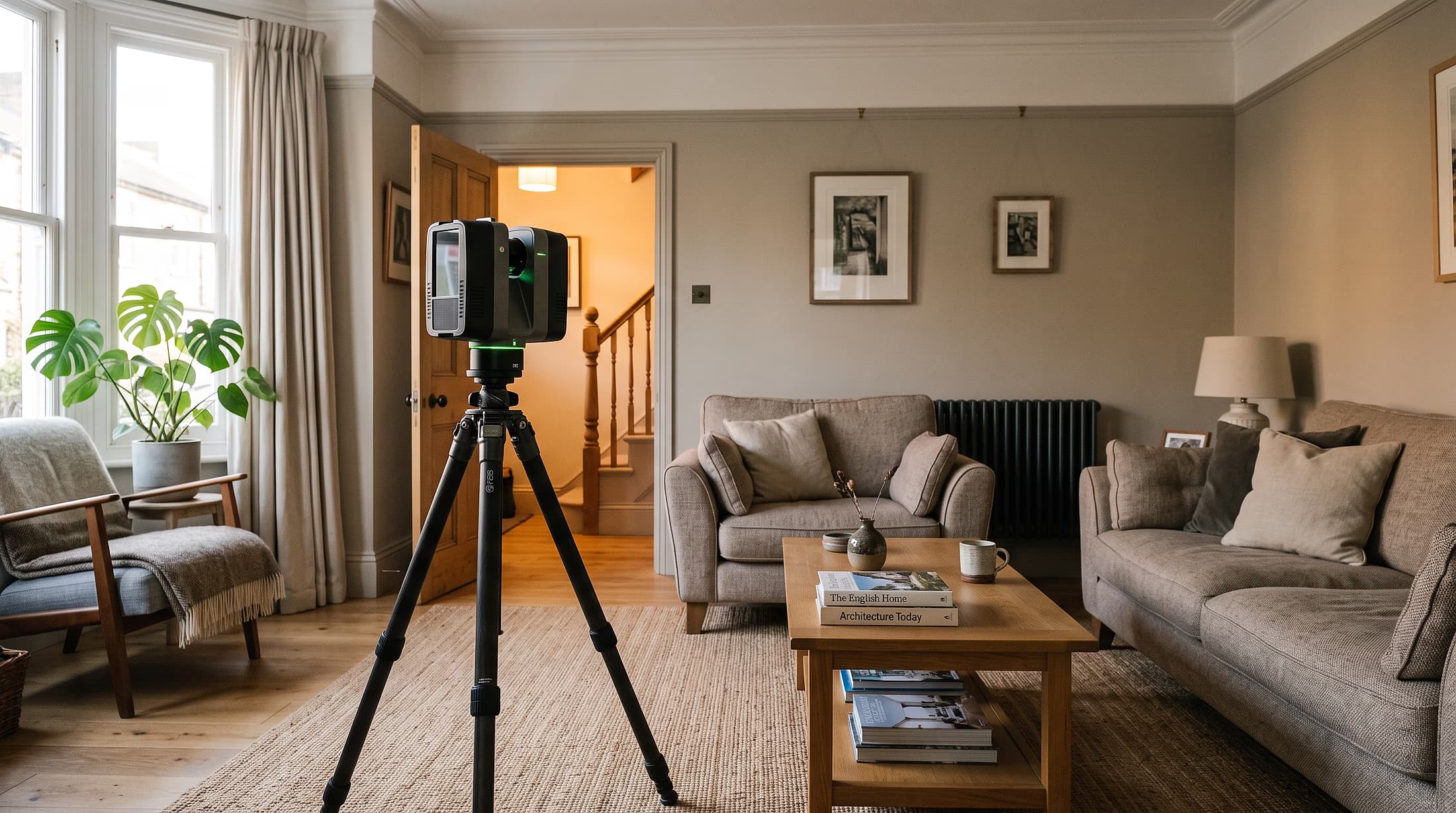
A surveyor measures every room, photographs every emitter, checks your electrical supply, and reviews roof orientation if solar is in scope. Around two hours.
You get · A full site record

Your complete design: unit and cylinder specification, emitter schedule, cost breakdown, BUS eligibility, and delivery timeline, at a fixed price.
You get · A written design and firm quote
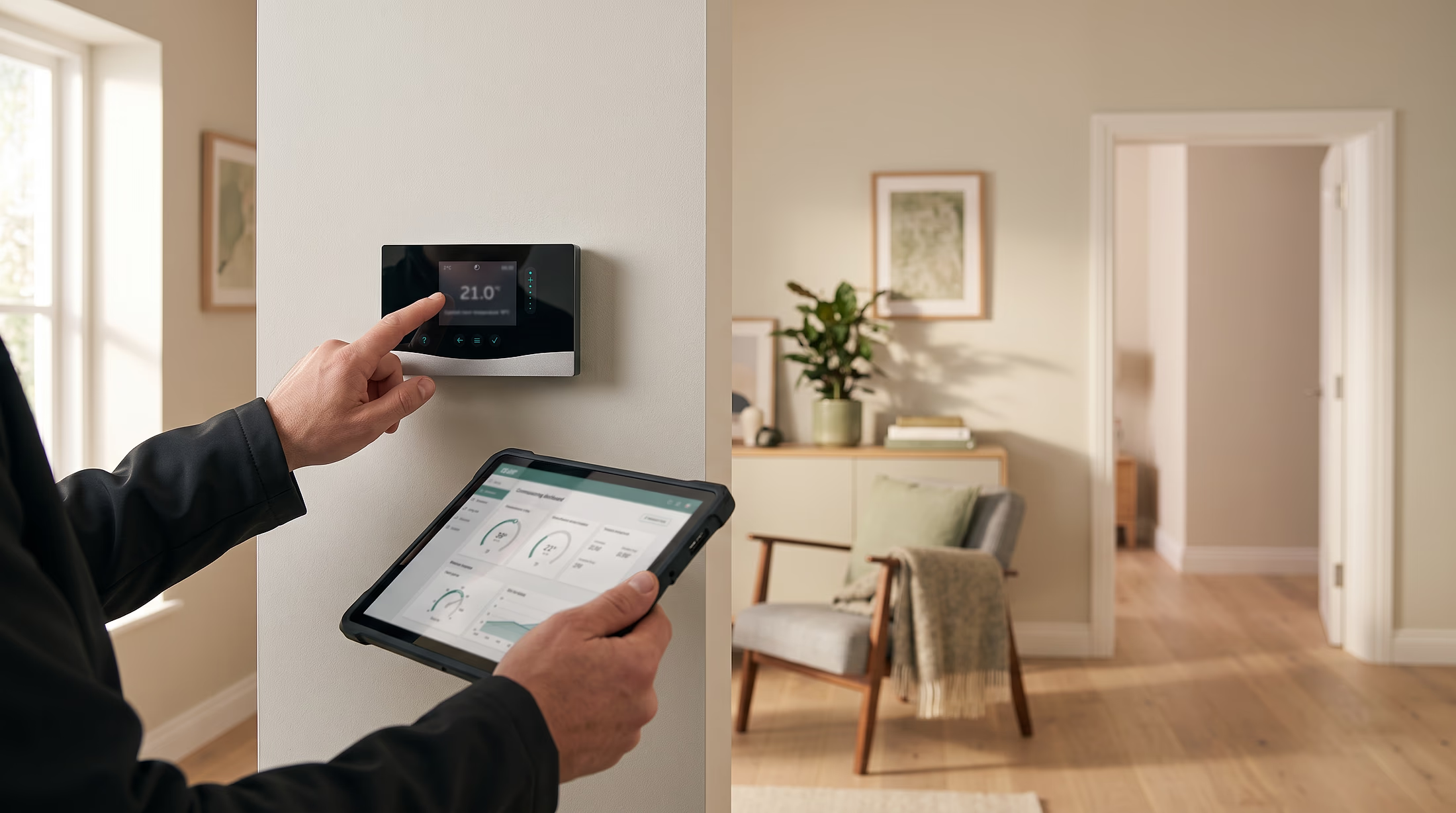
Outdoor unit, internal works, cylinder (if required), pressure testing, MCS commissioning, and a handover walk-through. Dust sheets throughout.
You get · A commissioned, working system

We return to tune the weather-compensation curve to how you actually use the system. BUS grant paperwork is completed by us throughout.
You get · A system tuned to real use
Our signature honesty
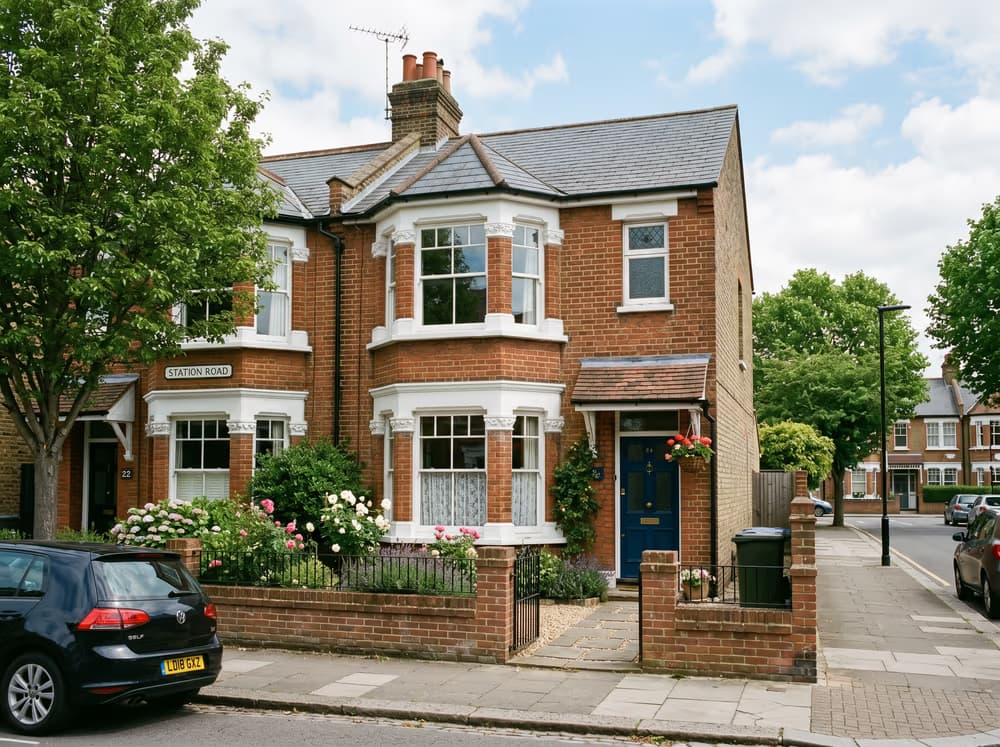
The property has no usable outdoor space for the unit. Small flats, terraced houses with front-only access, some conservation-area restrictions.
The heat demand is too high for available fabric upgrades to close. A Victorian terrace with solid walls, single glazing, and zero insulation would need a 16 kW unit that would struggle on the coldest January days. Fabric first, heat pump later.
You’re planning to move within 2–3 years. The BUS grant is a gift to the house, not to you. If you’re selling soon, you won’t recoup the install cost even with the grant.
The existing radiators can’t be upgraded to run at heat-pump flow temperatures. Rare, but it happens in some older systems where pipework can’t handle the flow.
In every case, we recommend the right path instead, often fabric work first, then heat pump 12–24 months later. The survey maps it out.
Fully-funded government grant, applied directly as a discount on your quote. We submit the application and handle Ofgem correspondence on your behalf.
Electrified heat, typically 3–4× more efficient than a gas boiler when the system is correctly sized and commissioned.

Modern units run at 45–55 dB at one metre. With thoughtful placement and anti-vibration detail, the unit is quieter than your fridge from inside the house.

Full MCS install certificate, TrustMark lodgement, and product warranty registration. Everything you need for the BUS grant, insurance, and any future sale.

Independently audited
03 registers held · verifiable with each issuing body
Straight answers
06 questions · asked on real surveys
Q01 / 06
Yes. Modern inverter heat pumps operate efficiently down to around minus fifteen and can still produce heat below minus twenty-five. The question is whether the system has been sized for your coldest day, not whether the technology is capable. Our heat-loss calculation uses a design external temperature that reflects your postcode's actual extremes, not a generic UK average.
Yes. Modern inverter heat pumps operate efficiently down to around minus fifteen and can still produce heat below minus twenty-five. The question is whether the system has been sized for your coldest day, not whether the technology is capable. Our heat-loss calculation uses a design external temperature that reflects your postcode's actual extremes, not a generic UK average.
Often, no, but frequently some. Heat pumps work best with larger emitter surface area at lower flow temperatures. Many 1990s-or-newer properties need only one or two radiator upgrades. Victorian solid-walled homes with small cast-iron radiators usually need more. Your survey will quantify this room by room.
Running cost depends on your tariff, your insulation level, your setpoint preferences, and your hot water usage. On the standard dual-fuel tariff with a well-insulated property, running costs are typically 10–30% lower than gas. On a heat-pump-friendly tariff like Octopus Cosy, savings can be 30–50%. We model your specific situation at survey. No generic marketing numbers.
The Boiler Upgrade Scheme grant is open to almost all English and Welsh homeowners replacing fossil fuel heating with an air source heat pump. Your property must have a valid EPC without outstanding loft or cavity insulation recommendations, and the installation must be completed by an MCS-certified installer (which we are). We confirm your eligibility at survey and handle the application.
You receive a five or seven year manufacturer warranty (depending on the unit), a two-year installation workmanship warranty from us, and a named contact for technical support. MCS-compliant installation is a condition of all major manufacturer warranties. Another reason to pick an MCS installer.
In most cases, yes. Heat pumps work best with a stored hot water cylinder rather than heat-on-demand. We specify a cylinder sized to your actual hot water usage and fit it somewhere sensible (airing cupboard, utility room, loft). For smaller properties with limited space, high-temperature heat pumps or thermal stores offer alternative routes.
A free survey, booked at a time that suits you, and the two numbers that make the maths work, sorted before you see a price.
Handled by us end to end. The figure you see on your fixed-price plan is the figure after the grant.
Through our FCA-regulated finance partner. Ask us to model the monthly figure against your current bills. Subject to status.
Grant eligibility checked during your free survey, before any quote.
Typical installed price · 3-bed semi
£8,500–£13,500 after the £7,500 Boiler Upgrade Scheme grant
for a typical 3-bed semi. Includes the outdoor unit, hot water cylinder, controls, pipework, commissioning, MCS certification, BUS application handled by us, and 5–7 year manufacturer warranty on the unit.
A free survey is how we turn this range into a fixed price. We'll never ask you to commit before the written plan is in your hands.
Driver 01 · tap what matches
Driver 02 · tap what matches
Driver 03 · tap what matches
OutlookAnswer the rows and we'll sketch where in the range your home is likely to land.
£7,500 Boiler Upgrade Scheme grant for gas-grid homes (£9,000 for off-grid oil or LPG homes, 21 Jul 2026 to 31 Mar 2027), 0% VAT, and finance to spread the rest. We apply the grant to your quote up front.
Updated 25 April 2026 · quarterly