

01
Construction-aware assessment
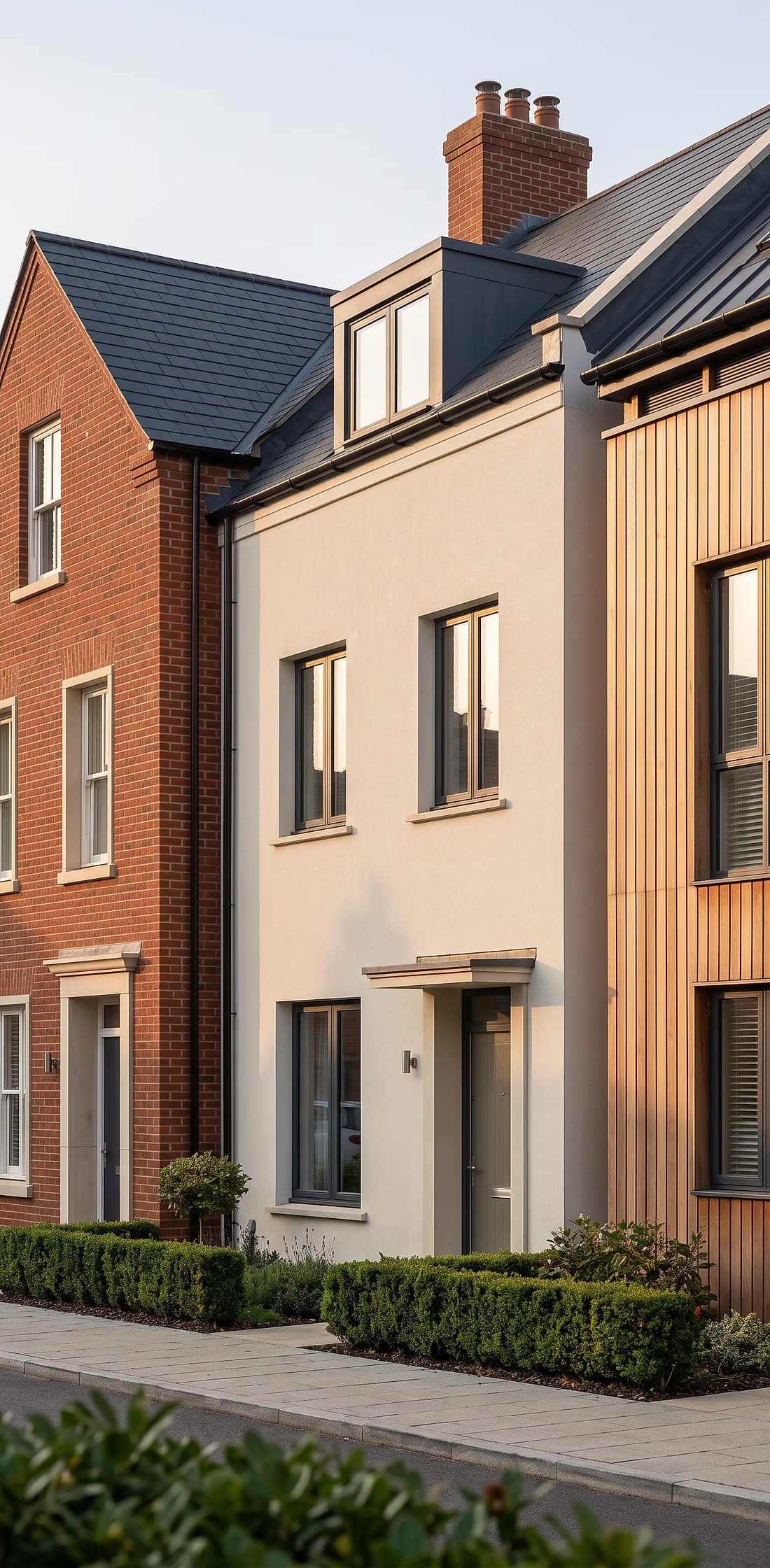
Solid-wall Victorian, cavity-wall 1930s, timber-frame 1980s. Each fails differently, so each gets a different specification. There is no standard answer.
Insulation
The cheapest way to cut a heating bill is to stop losing the heat. We survey, assess moisture, then recommend the right measure: external wall, loft, or cavity.
Why this matters
Insulation is the highest-impact retrofit measure, and the one most commonly done badly, with damp and mould that take years to appear. Doing it properly means a warm house from week one, not problems by winter.

What you get
The highest-impact retrofit measure, done in the right order and detailed to keep moisture out.

Our approach
Solid-wall Victorian, cavity-wall 1930s, timber-frame 1980s. Each fails differently, so each gets a different specification. There is no standard answer.
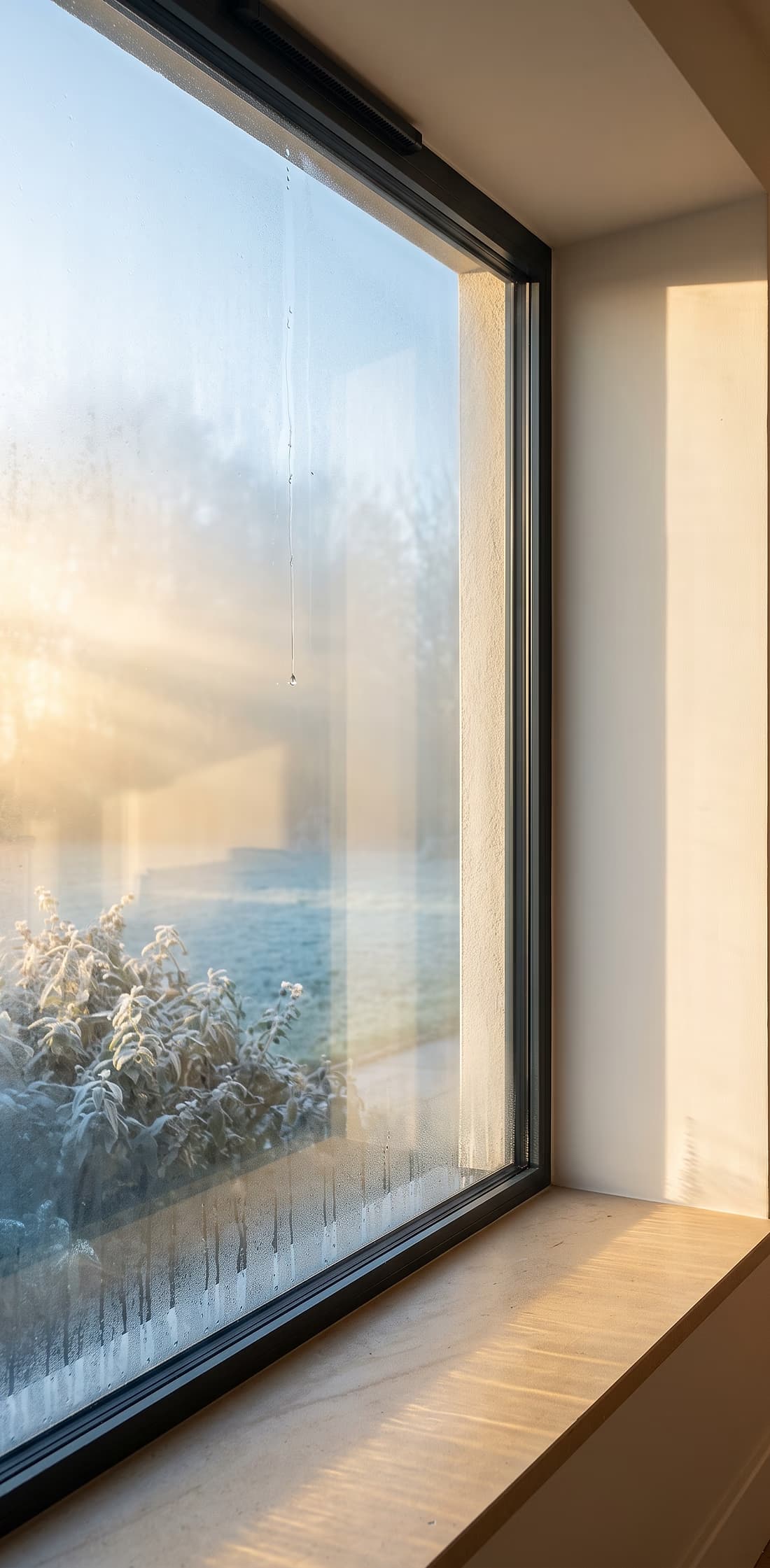
Every internal or external wall project gets an interstitial condensation assessment. Membrane and vapour control specified from the result, not the catalogue.
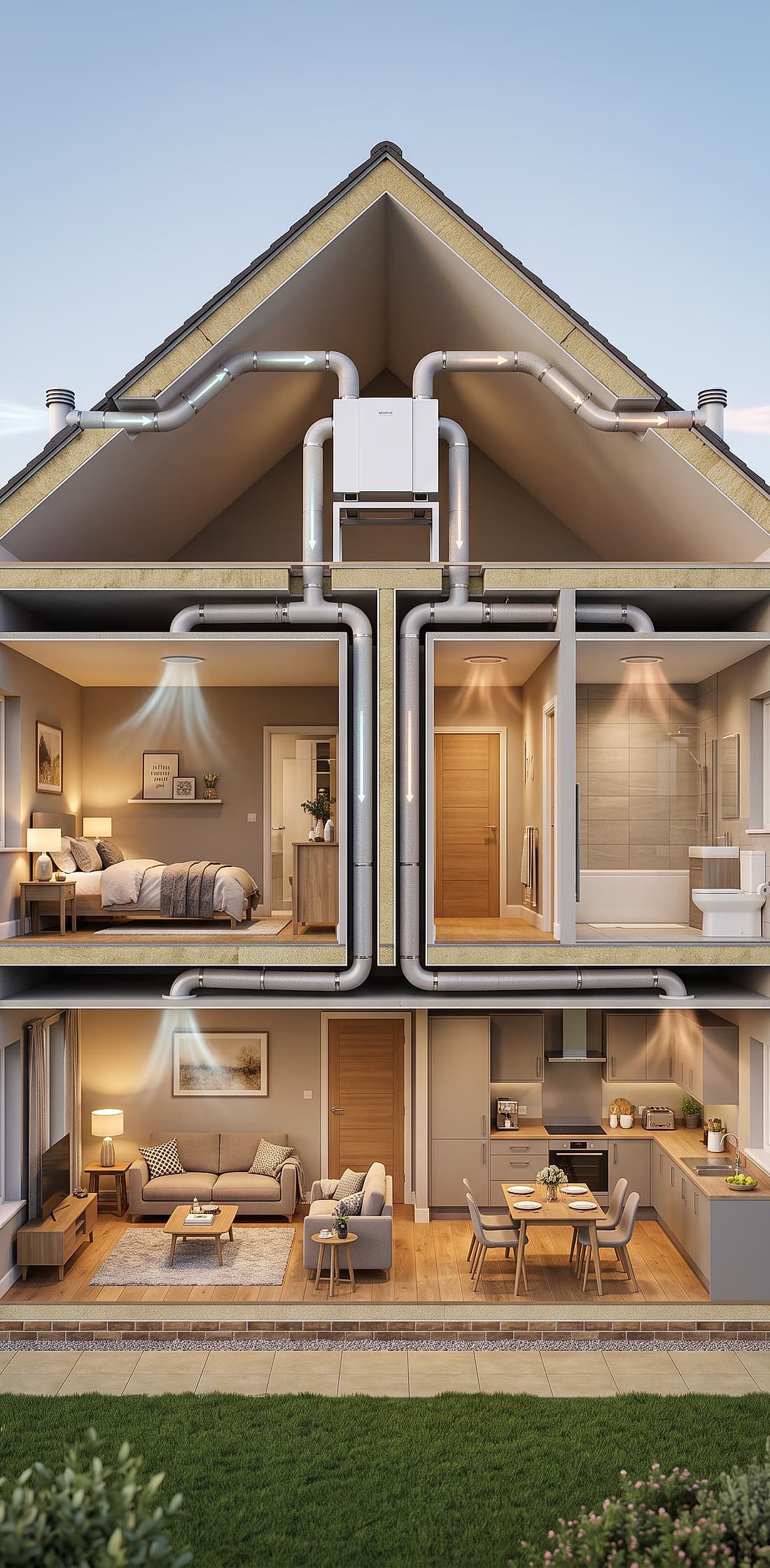
Insulation changes how a building breathes. We upgrade background ventilation, extraction, or MVHR to match, so draughts are not simply traded for damp.
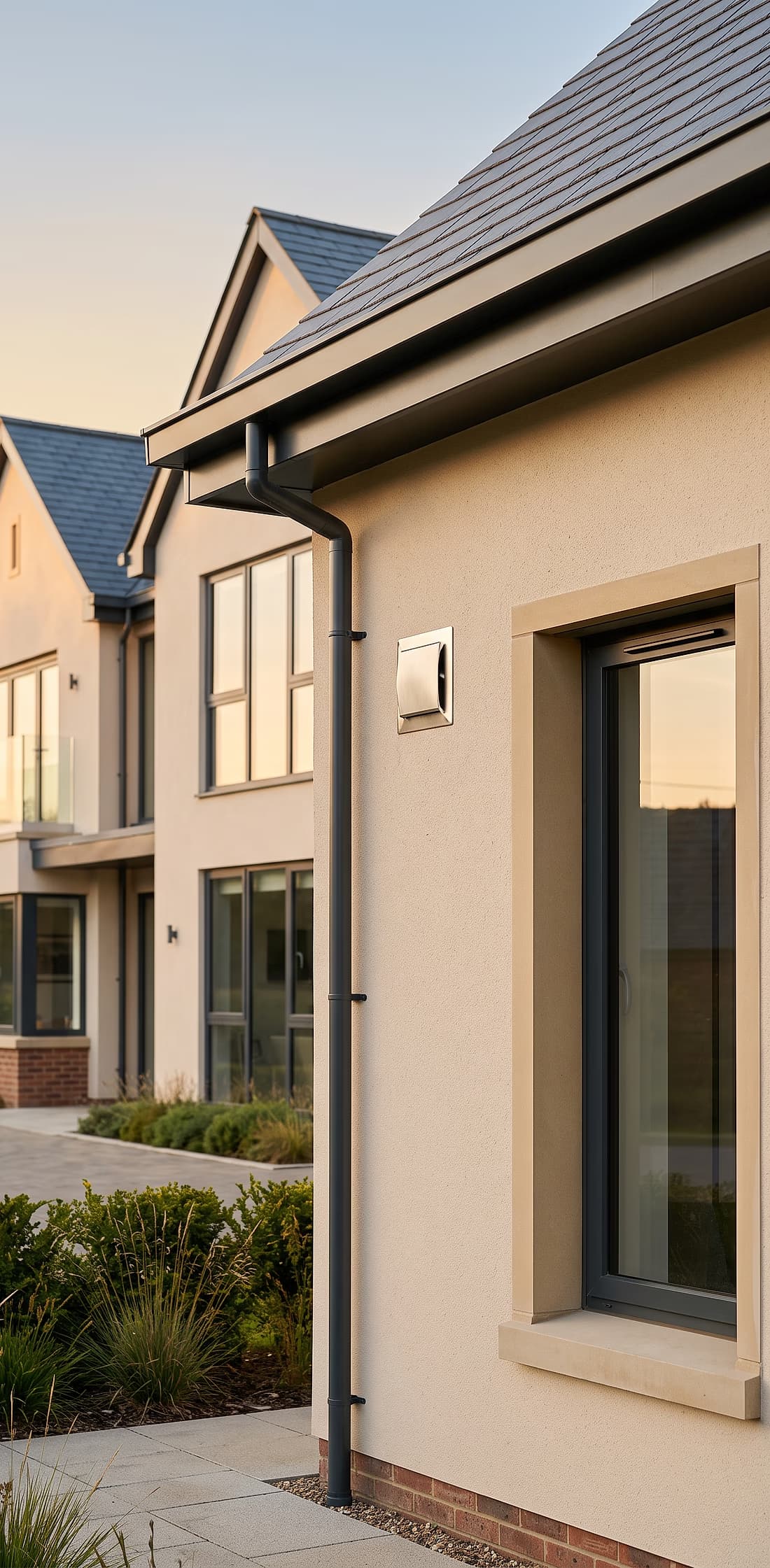
Reveals, lintels, eaves, service penetrations. This is where insulation projects go wrong, and where cheap installs stop paying attention. We detail them deliberately.
The process
Every stage documented, every price fixed before work starts. You will always know what is happening, when it finishes, and why it is being done that way.
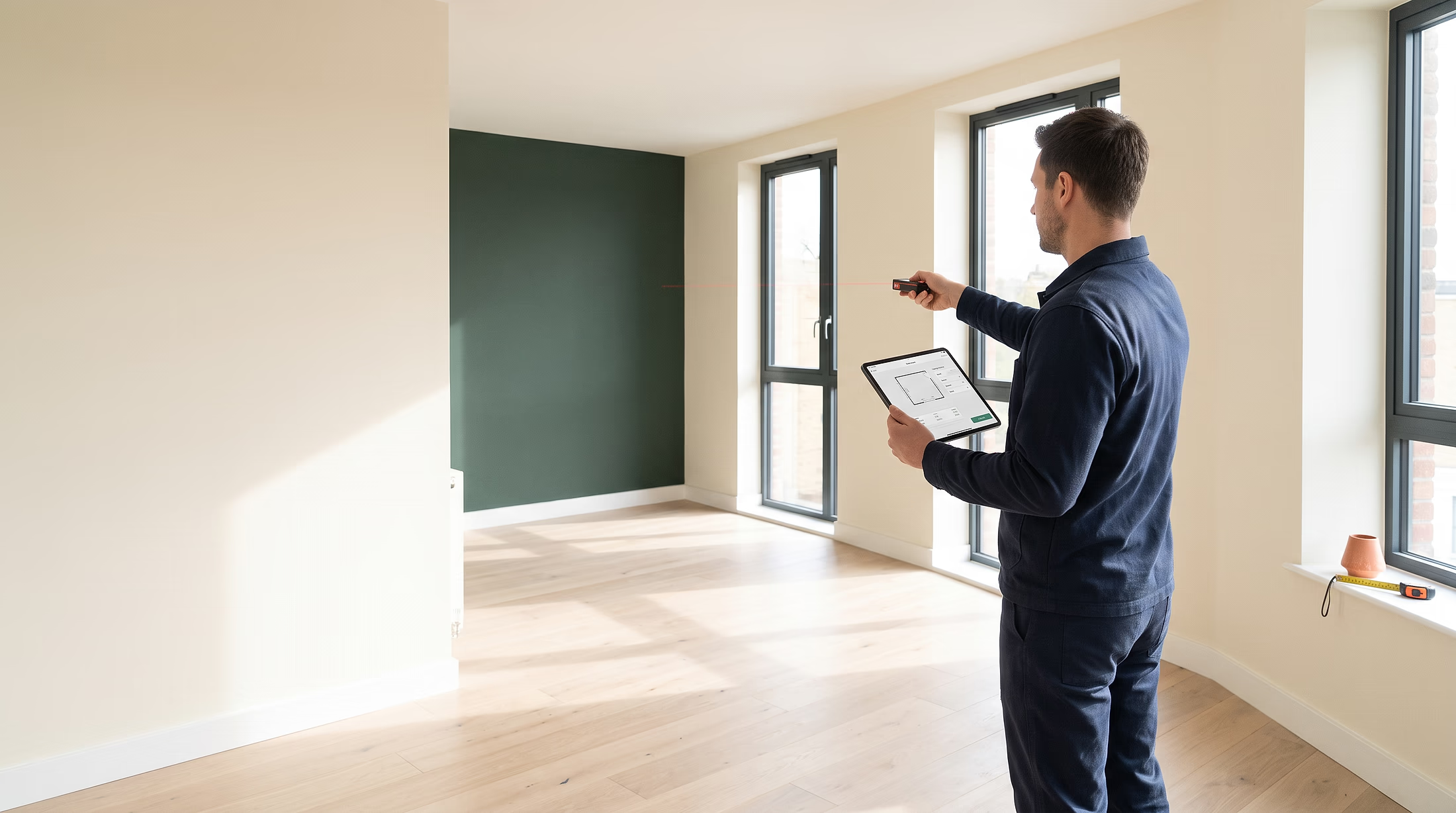
Construction type, existing insulation, ventilation, moisture risk, access. Photographed and measured throughout, so nothing is specified from memory.
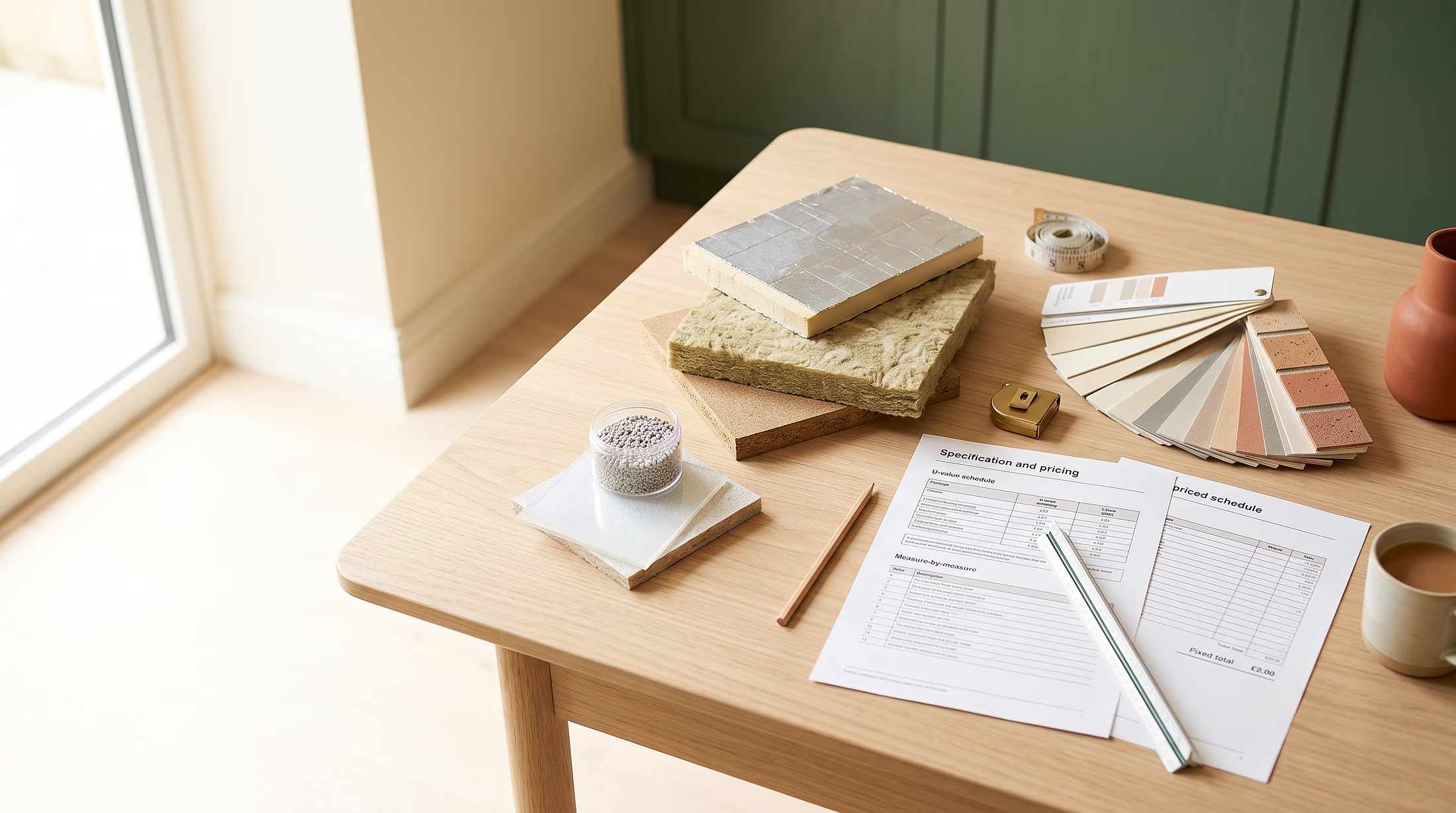
Material choices, U-value targets, ventilation upgrades, finishes, and any building control requirements. Written down, priced per measure, before work starts.
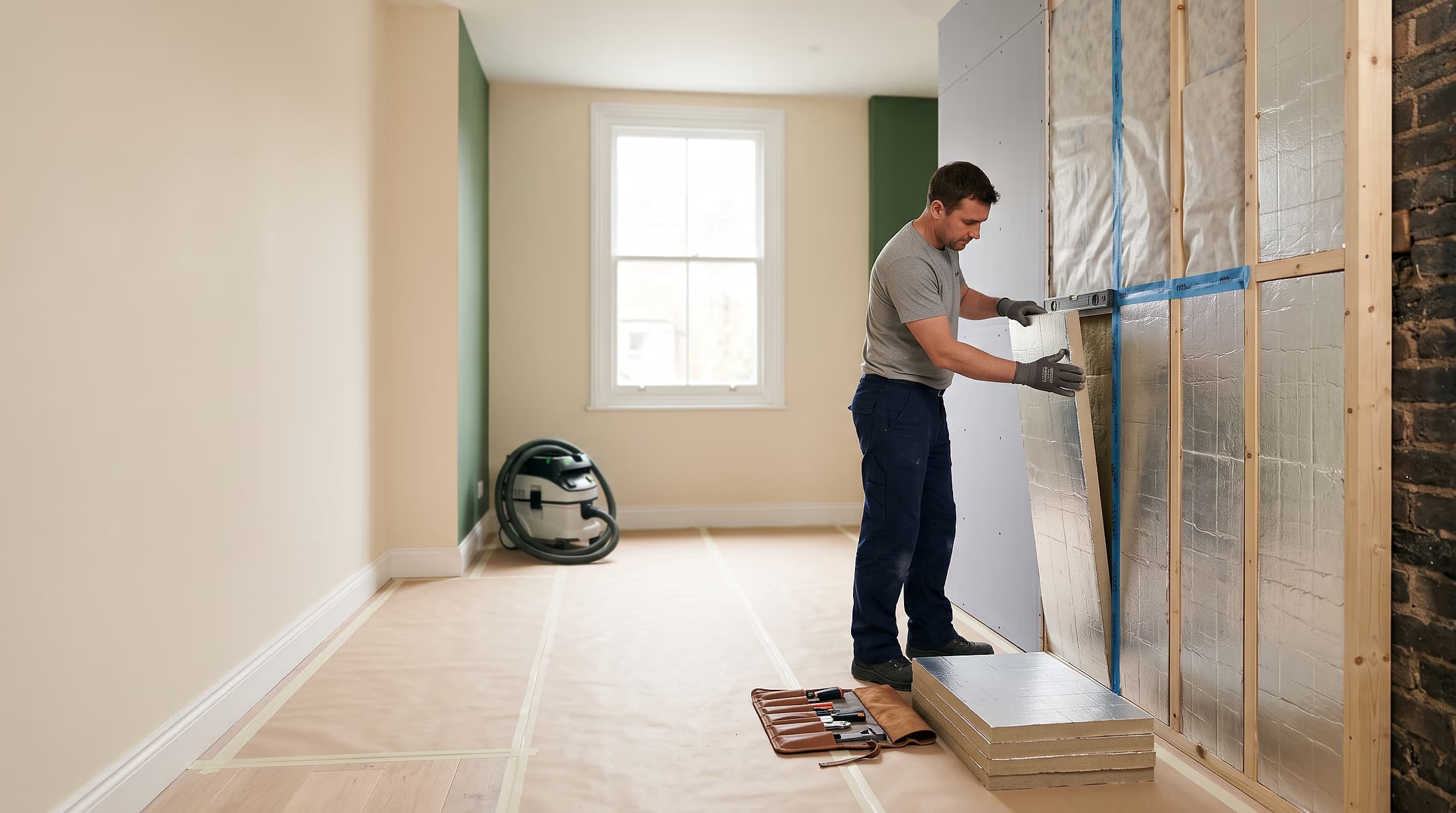
Loft, half a day. Cavity wall injection, half to one day. Internal wall insulation, one to two weeks per room. External wall insulation, four to six weeks.
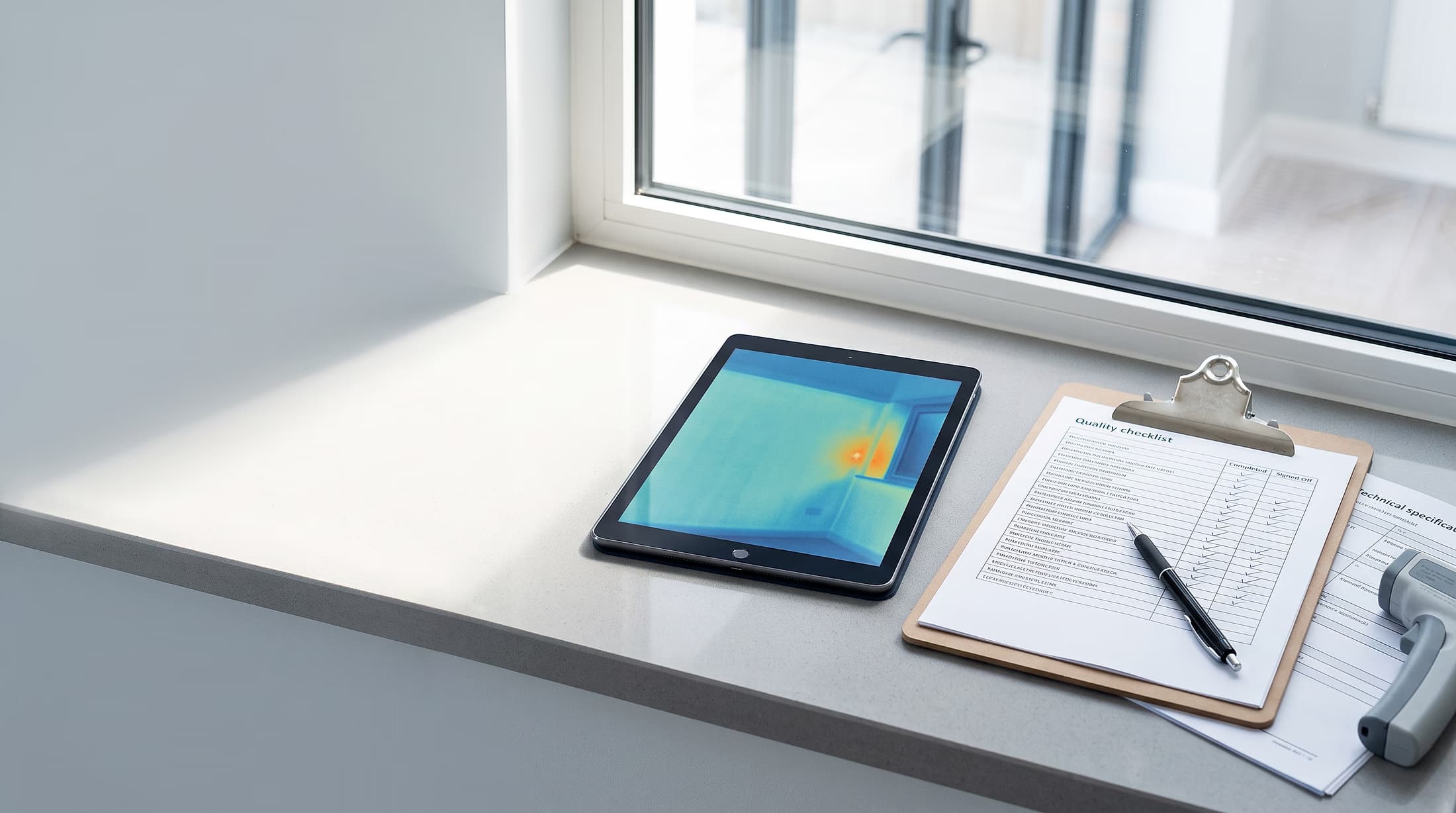
Every install checked against the written spec. Thermographic survey available on request for internal and external wall projects.
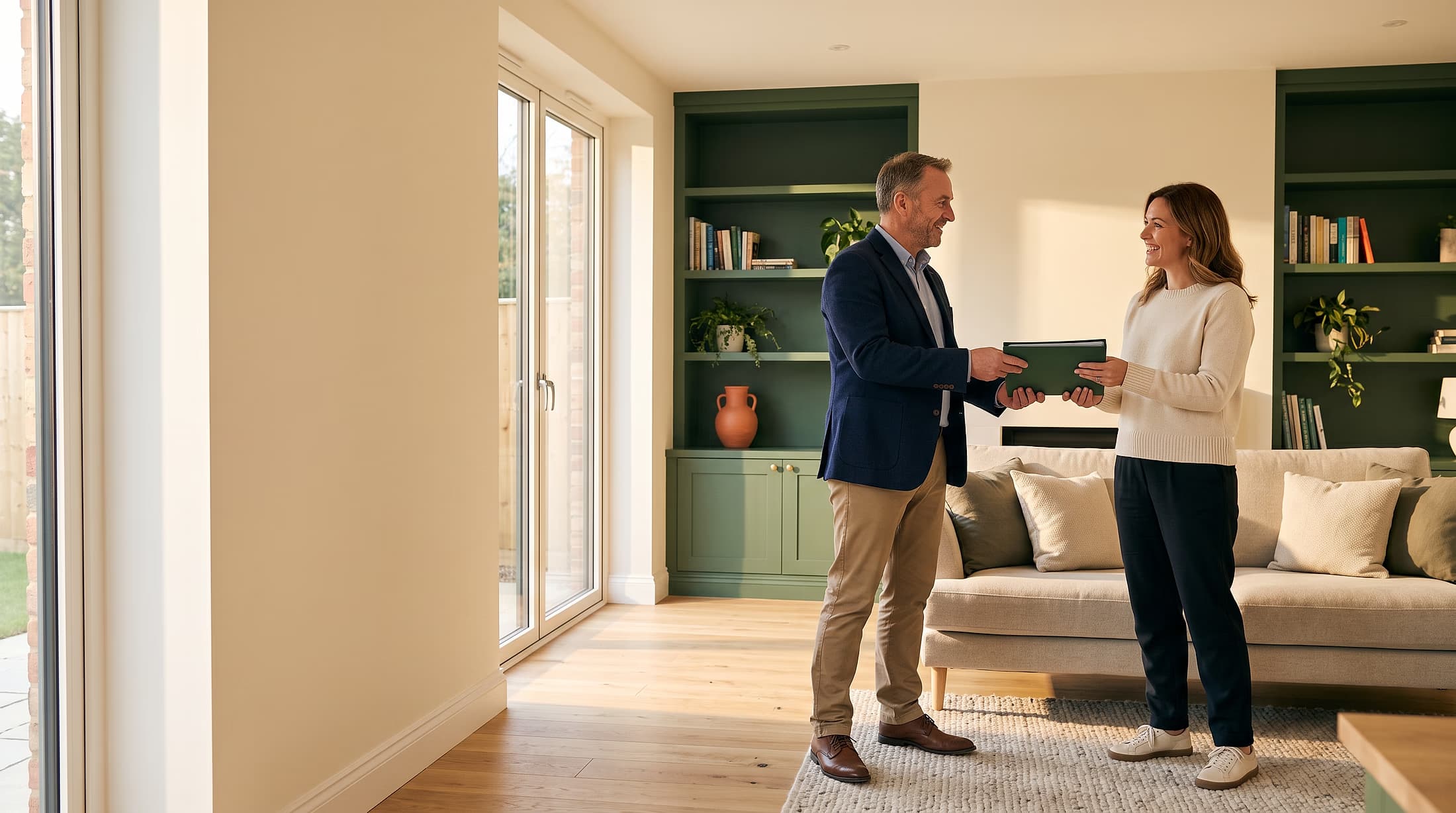
Building control sign-off where required, TrustMark lodgement, PAS 2030 documentation, and a handover pack covering ventilation and maintenance.
Our signature honesty
The borescope shows damp, rubble, or poor construction inside the cavity. Filling a compromised cavity traps moisture against the inner leaf. A damp bridge in a wet cavity is worse than the draughts it replaces, so we leave it and put the fabric right first.
Cracked or porous brickwork, or a high wind-driven-rain zone with solid or partly-solid walls. Insulated cavities in these conditions can carry water inward across the fill. Certain cavity materials simply aren’t appropriate for that exposure, and we’ll say so.
Internal wall insulation where the lost room size or the cost-per-m² outweighs the saving. If IWI would shrink a small room problematically, or the cost exceeds the likely ten-year energy saving, it’s the wrong measure. Loft and draught-proofing usually give more comfort per pound.
External wall insulation planning would reject, or where the neighbouring houses aren’t insulating too. A refused application or an unresolved junction with the house next door leaves you worse off than before. We check the planning and party-wall reality before quoting.
Any wall with untreated damp or structural defects behind the proposed insulation. Insulation over an unresolved problem hides it and accelerates it. The wall gets fixed first, or the job doesn’t happen.
Roughly 20% of the insulation enquiries we survey end in a “no, here’s the alternative” conversation. We’d rather tell you that on day one than ship a job that leaves you with moisture problems in five years.
The specialisms
Insulation isn’t one job. Five separate specialisms sit under the same discipline. Each is surveyed differently, each has its own moisture-risk check, and each is done by a team that does that specific work every week.
The most cost-effective single upgrade most UK homes can make. Top-up to 270mm, proper eaves-ventilation detailing, boarded storage raised on insulated stilts so storage doesn’t compress the insulation underneath, and fire-safe caps over recessed downlights. We thermal-image before and after so you can see the difference on camera.
Dual PAS 2030:2023 certified through two independent bodies because this is one of the highest-risk retrofit measures in the UK. Every cavity job starts with a borescope inspection at multiple locations and an honest verdict on suitability. The right material for your exposure rating, around-opening detailing to avoid thermal bridges, and a 25-year guarantee.
For properties with the architectural flexibility for it. Render system or through-coloured silicone topcoat matched to the property. Scaffolding around the building for four to six weeks; no internal disruption. Full condensation-risk analysis and vapour-control detailing. The single biggest single-measure carbon reduction a solid-walled home can make.
For properties where external insulation isn’t appropriate: listed buildings, conservation areas, or owners who want the external character preserved. Done room by room, with full hygrothermal modelling to ensure the wall can still breathe. Redecoration and some furniture disruption during works. Electrical sockets and radiators carefully re-fixed.
Suspended timber floors can lose significant heat, often the coldest bit of a Victorian terrace. Rigid board between joists, properly detailed at edges, ventilation preserved below. Draught-proofing around windows, doors, letterboxes and floorboards is often the highest-ROI retrofit intervention of all, and we include it on every fabric survey as standard.
Warmer internal surface temperatures, fewer cold spots, less draught, most noticeable in the rooms you use most.
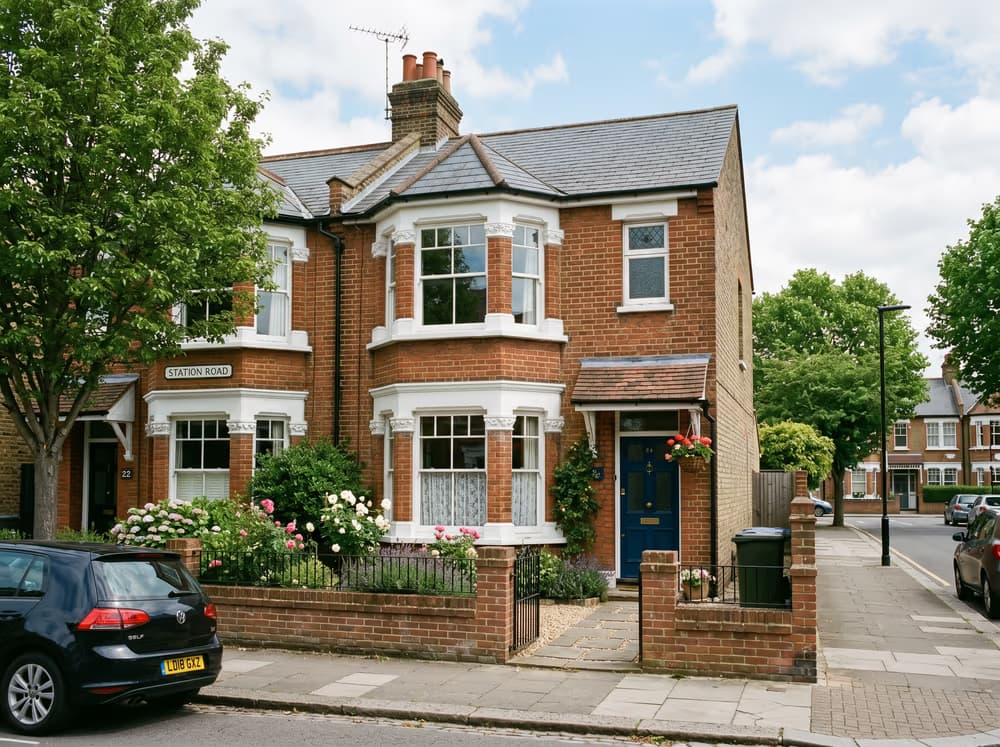
Typical whole-house insulation upgrade reduces heat demand by 20–40%, making any heating system cheaper to run and smaller to size.
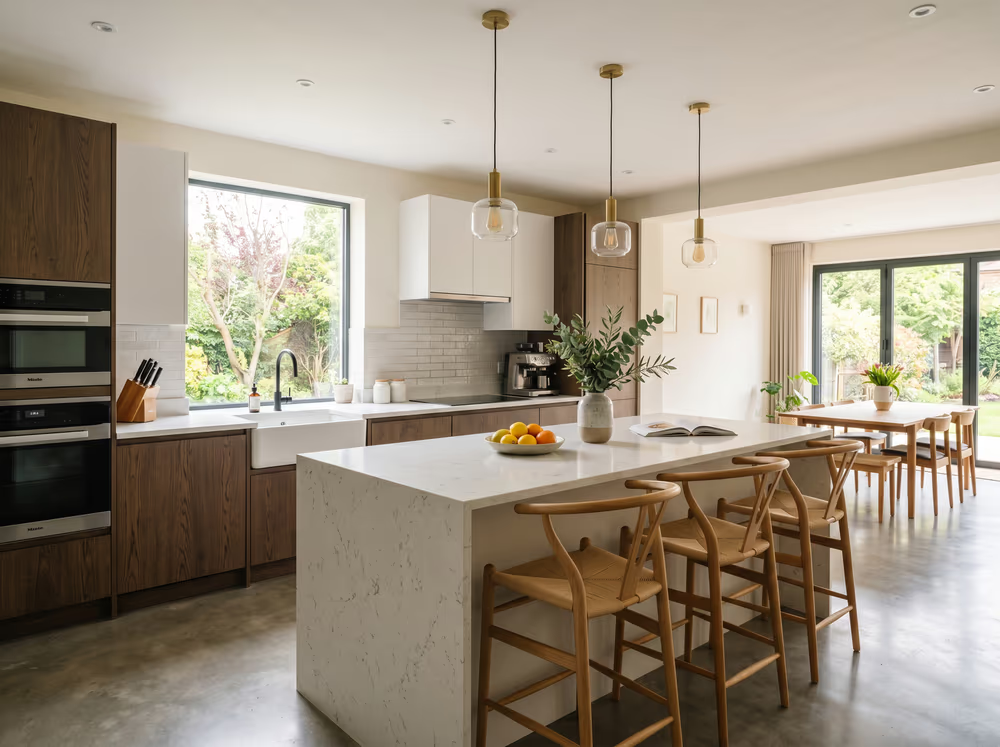
External wall insulation and some internal systems also reduce external traffic and neighbour noise, particularly in terraced properties.

Insulation first, heating second, generation third: the order that delivers the best lifetime cost and comfort result.
Independently audited
04 registers held · verifiable with each issuing body
Straight answers
06 questions · asked on real surveys
Q01 / 06
For most properties, loft insulation (if under 250 mm) or cavity wall insulation (if empty and suitable) are the lowest-hanging fruit: affordable, fast, and impactful. External or internal wall insulation for solid-walled properties is higher cost but transformative. We prioritise based on your property's actual heat loss breakdown, not a national average.
For most properties, loft insulation (if under 250 mm) or cavity wall insulation (if empty and suitable) are the lowest-hanging fruit: affordable, fast, and impactful. External or internal wall insulation for solid-walled properties is higher cost but transformative. We prioritise based on your property's actual heat loss breakdown, not a national average.
External wall insulation is thermally better (no cold bridges at intermediate floors) and preserves your internal space, but requires planning consent in some areas and changes your property's external appearance. Internal wall insulation is cheaper and faster but reduces room size by around 100mm per wall and requires careful detailing around windows and sockets. We explain the trade-offs for your specific property.
Not if it is done properly. Damp problems after insulation almost always trace to inadequate ventilation: insulation reduces air leakage, so ventilation must be actively designed. We assess and upgrade ventilation as part of every internal or external wall insulation project. Cutting corners here is why insulation has a poor reputation in some quarters.
For suitable properties, yes. Bonded bead injection has a thirty-year track record and a CIGA guarantee. Unsuitable properties (exposed coastal, defective render, narrow or blocked cavities) are a different matter. Our surveyor inspects the cavity with a borescope before recommending injection. If it is not suitable, we say so.
ECO4 is effectively closed to new work, so we don't build quotes around it. The honest default is a bespoke private quote with 0% VAT on energy-saving materials, which the government has confirmed until 31 March 2027. If you receive certain qualifying benefits you may be eligible for council-delivered Warm Homes: Local Grant funding. We check that at survey, but we never build the price around a grant that might not land.
Cavity injection is very low disruption: holes drilled in mortar, bead injected, holes repointed. Half a day per house. Internal wall insulation is more involved (one to two weeks per room, furniture removal and redecoration required). External wall insulation is the most involved (four to six weeks, scaffold around the property), but does not affect internal life at all.
Take the next step
Book a free survey. A qualified engineer will visit, assess your property honestly, and send a written recommendation within five working days. No obligation.
Typical installed price · Cavity wall, 3-bed semi
£800–£2,200
for a typical 3-bed semi cavity fill, including moisture-risk assessment and 25-year CIGA warranty.
A free survey is how we turn this range into a fixed price. We'll never ask you to commit before the written plan is in your hands.
Driver 01 · tap what matches
Driver 02 · tap what matches
Driver 03 · tap what matches
OutlookAnswer the rows and we'll sketch where in the range your home is likely to land.
The honest default is a bespoke private quote with 0% VAT (energy-saving materials, until 31 Mar 2027). If you receive certain benefits you may qualify for council-delivered Warm Homes: Local Grant funding, which we check at survey but never build the quote around.
Updated 25 April 2026 · quarterly